Abstract
In 2025, both Google DeepMind and OpenAI reported that their large language model (LLM)-based AI systems had achieved gold medal level performance in the International Mathematical Olympiad. In addition, together with research mathematicians, DeepMind has made reported progress in solving research-level mathematical problems with their AI system. These developments suggest that in the near future important parts of mathematical theorem proving may be outsourced to LLM-based AI systems, what AI developers call large reasoning models (LRM). However, the LRMs still commonly make errors in simple reasoning tasks, prompting questions about their reliability as mathematical (and other) tools.
In this talk, I want to take first steps toward establishing an epistemology of artificial mathematical reasoning, in order to set up a systematic framework for studying mathematical reasoning in AI systems. I divide the topic into two questions. First, in the “knowledge of” question we ask how we can identify reasoning ability (if any) in AI systems. Second, in the “knowledge through” question we ask how mathematical knowledge generation takes place with the help of AI reasoning systems (if any). Finally, I will consider the consequences to mathematical practice and mathematical communities that such AI systems could have.
Bio
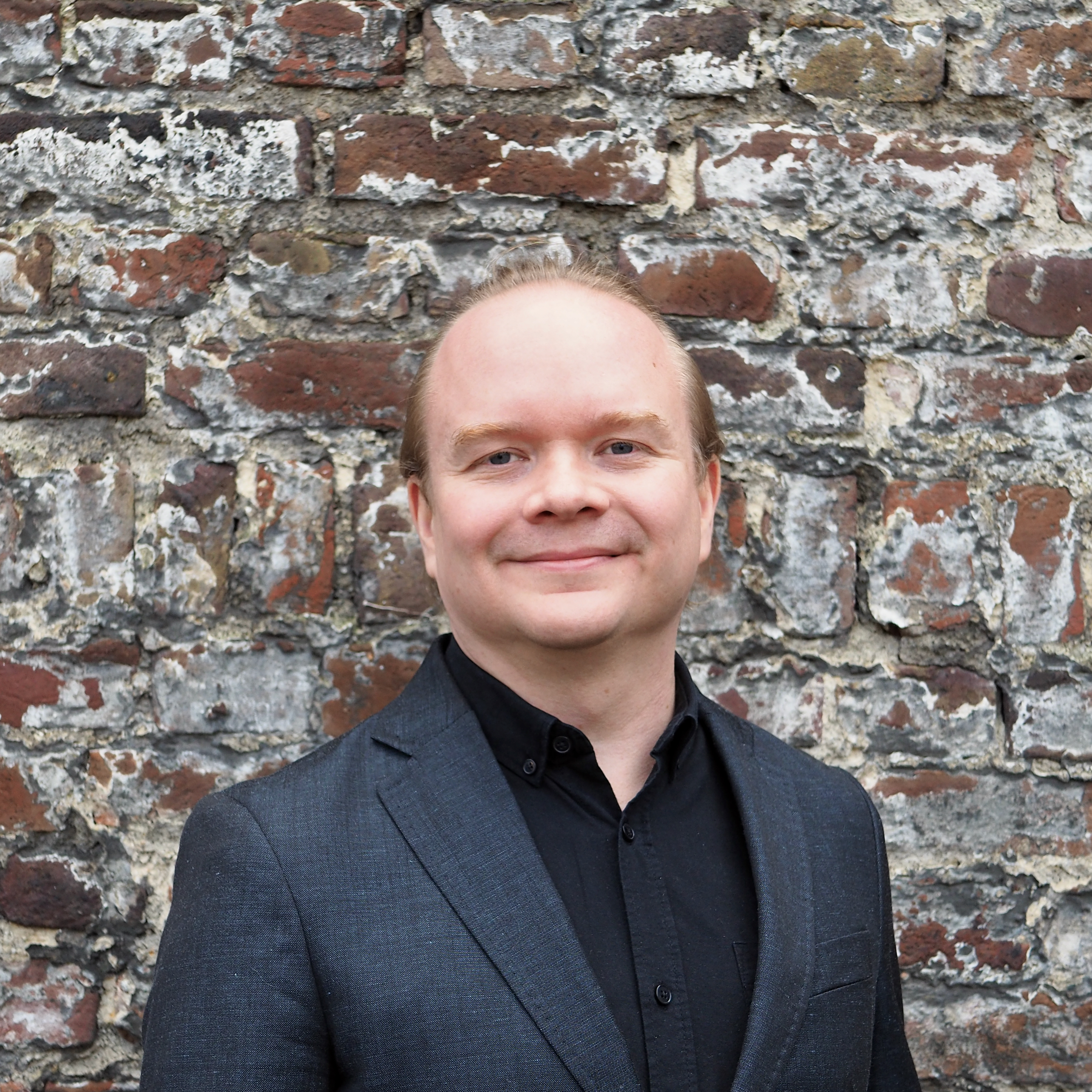
Markus Pantsar is a Guest Professor at the Chair of Theory of Science and Technology, RWTH Aachen University, Germany. He holds the Title of Docent in theoretical philosophy at the University of Helsinki, Finland. He has published extensively in the philosophy of mathematics, including the book Numerical Cognition and the Epistemology of Arithmetic (Cambridge University Press, 2024). In recent years, he has focused on the philosophy of artificial intelligence, in particular the use of AI systems in mathematical contexts.